
Have you ever marvelled at the intricate details of a strawberry or the vibrant colors and texture of star anise under a macro lens? I sure have, and it’s what drew me into the world of macro food photography. This is not just about zooming in on food — it’s about uncovering a hidden universe, telling a story, and evoking emotions through the lens, focusing on the minute yet mesmerizing details.
Jump to:
As a fellow explorer in this captivating journey, I invite you to delve into the art and science of macro food photography with me. Whether you’re just starting or looking to refine your skills, this guide is your comprehensive companion. Ready to transform the ordinary into the extraordinary? Let’s embark on this visual adventure together!
Introduction to Macro Food Photography
Welcome to the world of macro food photography, where tiny details turn the ordinary into something extraordinary. Up close, food reveals stunning textures and vibrant colors — and that’s the perspective that first drew me in. I’m excited to share that journey with you.
What Makes Macro Food Photography Special?
- It’s not just about taking close-up shots; it’s an art form that requires a keen eye for detail, patience, and a bit of technical know-how. Macro photography is a genre of its own.
- It’s about seeing the world from a different angle, appreciating the beauty in the details, and telling a story through the lens.
- Whether it’s the glistening droplets on a ripe berry, or the intricate patterns of spices, macro photography allows us to explore a world that’s often overlooked.
For the Newbies: Macro photography involves capturing small subjects up close so that they appear life-sized or larger in the photograph. Macro photography allows us to see details we don’t normally see with the naked eye. This technique:
- Reveals the beauty and complexity of food in a way that standard photography simply cannot.
- Makes the textures, colors, and shapes of your subject the main characters of your story, offering viewers a fresh and immersive experience.
Embarking on This Journey: As we delve into this guide, I’ll share with you the fundamentals of macro food photography — from understanding the equipment to mastering the techniques that will elevate your food photography game.
The Unique Charm of Macro Food Photography

Diving deeper into the heart of macro food photography, we uncover the elements that make this genre truly stand out. It’s not just about zooming in — it’s about unveiling a story, layer by layer, through the lens of your camera. Here’s what sets macro food photography apart, making it a captivating art form:
A New Perspective on the Familiar
- Discover the unseen: Macro photography reveals the intricate details of everyday foods, turning familiar items into uncharted territories.
- Every shot is a discovery: From the texture of a kiwi’s seeds to the delicate patterns on a mushroom cap, each photograph invites viewers to explore and appreciate the minutiae.

Storytelling Through Details
- Beyond the surface: Each image tells a story, whether it’s the journey of a water drop meandering down a vibrant bell pepper or the subtle play of light on a chocolate truffle.
- Emotional resonance: The close-up shots evoke emotions, connecting viewers with the food on a personal and intimate level.
Technical Mastery Meets Creativity
- Precision and patience: Macro food photography demands a meticulous approach, where focus, lighting, and composition play pivotal roles.
- Creative playground: It offers endless possibilities to experiment with different angles, lighting, and backgrounds, pushing the boundaries of your artistic expression.
The Challenge and Reward
- Not for the faint of heart: This genre challenges photographers to go beyond the basics, requiring a steady hand, technical skills and an eye for detail.
- Immense satisfaction: The joy of capturing a perfect macro shot is unparalleled, offering a sense of achievement, and a unique addition to your portfolio.
Engaging the Senses
- Visual feast: Macro shots can make viewers’ mouths water, their eyes widen, and their minds wonder, engaging multiple senses simultaneously.
- A closer look: It encourages people to pause and ponder, fostering a deeper connection with the subject and its story.
Key Concepts in Macro Food Photography
In macro food photography, understanding the lingo is crucial to mastering the craft. Let’s demystify some essential terms, ensuring you’re well-equipped to dive deeper into this fascinating genre.
Magnification
| What It Means | The ratio between the size of a subject on the camera sensor and its size in real life. |
| Why It Matters | Understanding magnification helps you know how large your subject will appear in the image. With a true macro lens, you can achieve 1:1 magnification, meaning the subject is projected life-size onto the camera sensor. |
Minimum Focusing Distance
| What It Means | The closest distance at which your lens can focus on a subject. Note: Macro lenses allow you to get much closer to your subject than most other lenses. |
| Why It Matters | Knowing this distance tells you how close you can position your camera while still maintaining sharp focus. Note: This is especially important in macro photography, where capturing fine details requires shooting at very close range. |
Note
The Canon 100mm f/2.8 macro lens has a minimum focusing distance of 31 cm (about 12 inches). This means the camera sensor must be at least this distance from the subject in order for the lens to focus properly.
Aperture
| What It Means | The opening in your lens that controls how much light enters the camera. It’s measured in f-stops (e.g., f/2.8, f/8). |
| Why It Matters | Aperture affects both — exposure and depth of field. In macro photography, depth of field becomes extremely shallow, so selecting the right aperture helps ensure enough of your subject stays in focus. |
Shallow and Deep Depth of Field (DoF)
| What It Means | A shallow DoF means only a small portion of the image is in focus, while a deep DoF keeps more of the scene sharp. |
| Why It Matters | Controlling DoF is vital in macro photography. A shallow DoF helps isolate your subject by blurring the background, while a deeper DoF allows more of the subject or scene to remain in focus. |
Note
In macro photography, depth of field becomes extremely shallow, so even small adjustments in aperture can significantly affect how much of your subject appears sharp.
Diffraction
| What It Means | A phenomenon where light bends as it passes through a very small aperture, which can reduce image sharpness. |
| Why It Matters | Understanding diffraction helps you balance the desire for greater depth of field with the need to maintain image sharpness. |
Understanding these terms helps build your technical foundation, and makes it easier to turn your creative ideas into images. Keep this glossary handy as you explore the details of macro food photography.
Mastering Depth of Field in Macro Food Photography
Depth of Field (DoF) isn’t just a technical term — it’s the magic wand in your macro food photography toolkit. It’s what transforms a good photo into a visual story, guiding the viewer’s eye and emotions through the frame.
Why DoF Matters:
- Sharpness vs. Blur: DoF determines which part of your scene is in sharp focus versus softly blurred. A shallow DoF makes your subject pop against a dreamy background, while a deep DoF offers a detailed view of the entire scene.
- Directing Attention: In macro food photography, where details are king, DoF lets you highlight the star of the show. Imagine focusing on the glistening dew of a strawberry, with the seeds fading into a gentle blur — pure magic!
Controlling Your DoF:
- Aperture Adventures: Your Aperture setting is your DoF dial. A larger Aperture (smaller f-number) narrows the DoF, creating a creamy blur — this is what creates a Shallow DoF. A smaller aperture (larger f-number) expands the DoF, bringing more details into focus — this is what creates a Deep DoF.
- The Balancing Act: Watch out for diffraction with smaller Apertures, which can soften your image. It’s all about finding that sweet spot where your subject shines without losing overall image quality.
Role of Lighting:
- Illuminate: A narrower DoF (higher f-number) needs more light. You might need to boost your lighting setup or tweak your ISO and Shutter Speed to get the exposure just right.
Embrace Experimentation:
- Trial and Error: Play with different Aperture settings and observe their impact. Does a bokeh background make your subject stand out, or does a detailed scene tell a better story?
The Quintessential 100mm Macro Lens

When it comes to macro food photography, the lens you choose can make all the difference. Enter the 100mm macro lens, often hailed as the crown jewel of macro lenses.
When I got my 100mm, I was over the moon. I could not believe the possibilities that came with this incredible macro lens, which also happens to be my favorite and most used lens.
This lens isn’t just a tool — it’s your passport to a world of unparalleled detail and clarity. Let’s explore why the 100mm macro lens is a must-have for any serious macro photographer.
- Unmatched Clarity and Detail: The 100mm macro lens offers exceptional sharpness, allowing you to capture the finest details of your food subjects. Whether it’s the subtle textures of a raspberry or the intricate patterns of a leafy vegetable, this lens brings out the minutest details that are often invisible to the naked eye.


The 100mm lens guides us on an exploration of textures, patterns, and colors previously unnoticed. It presents an opportunity to see the world through a fresh lens, introducing an element of surprise — both for the creators and the audience.
- Perfect Working Distance: One of the standout features of a 100mm macro lens is its generous working distance. It allows you to stay comfortably away from your subject while still achieving life-size (1:1) magnification. This extra space makes it easier to arrange lighting, adjust props, and avoid casting unwanted shadows — an advantage when photographing detailed subjects like food.
- Beautiful Bokeh: Bokeh refers to the aesthetic quality of the blur in the out-of-focus areas of an image. A 100mm macro lens can produce a smooth, pleasing background blur, helping your subject stand out from the scene. This separation adds depth, and gives your photographs a polished, professional look.
- Versatility: While it’s a powerhouse for macro work, the 100mm lens is incredibly versatile. It’s excellent for beautiful food portraits — without the distortion some other lenses produce, providing flattering compression, and isolating your subject from the background. This macro lens adapts to a wide range of photographic needs.
- Durability and Build Quality: 100mm macro lenses are typically well-built and designed for precision. Their solid construction and smooth focusing make them reliable tools for capturing fine details, whether you’re shooting in a studio or on location.
Incorporating a 100mm macro lens into your kit opens up a new realm of creative possibilities. It’s an investment that pays dividends in the quality and creativity of your macro food photography, allowing you to capture images that truly resonate with your audience.
Tackling the Challenges of Macro Food Photography
Embarking on the macro food photography journey is exhilarating, yet it comes with its own set of challenges. Fear not! Let’s break down the common challenges and how to conquer them:
Achieving the Perfect Focus
- The Challenge: With macro photography, even the slightest movement can throw your subject out of focus. Achieving sharpness where it matters most is crucial.
- The Solution: Use a tripod to stabilize your camera, and consider using Manual Focus to gain precise control over your focus point. A remote shutter release or your camera’s timer can also reduce camera shake.
Controlling Depth of Field
- The Challenge: At such close distances, the depth of field becomes extremely shallow, making it challenging to keep important details in focus.
- The Solution: Experiment with smaller Apertures (larger f-stop numbers) to increase the depth of field. However, be mindful of the lighting, as smaller apertures require more of it.
Managing Lighting
- The Challenge: Proper lighting is crucial in macro photography. Too much can wash out details, while too little can leave your subject underexposed (too dark).
- The Solution: Reflectors can help bounce light to reduce shadows, and diffusers can soften harsh light. Consider using artificial light for consistent, controlled lighting.
Composition and Background Distractions
- The Challenge: With such a tight focus, it’s easy for the background to become distracting, pulling attention away from your subject.
- The Solution: Choose simple backgrounds that complement your subject without competing for attention. A shallow depth of field can also blur the background, keeping the focus on your subject.
Bonus: Macro Photography Techniques and Ideas
Now that you’re equipped with the knowledge of macro food photography and the power of the 100mm lens, let’s dive into some creative techniques and ideas to inspire your next shoot.
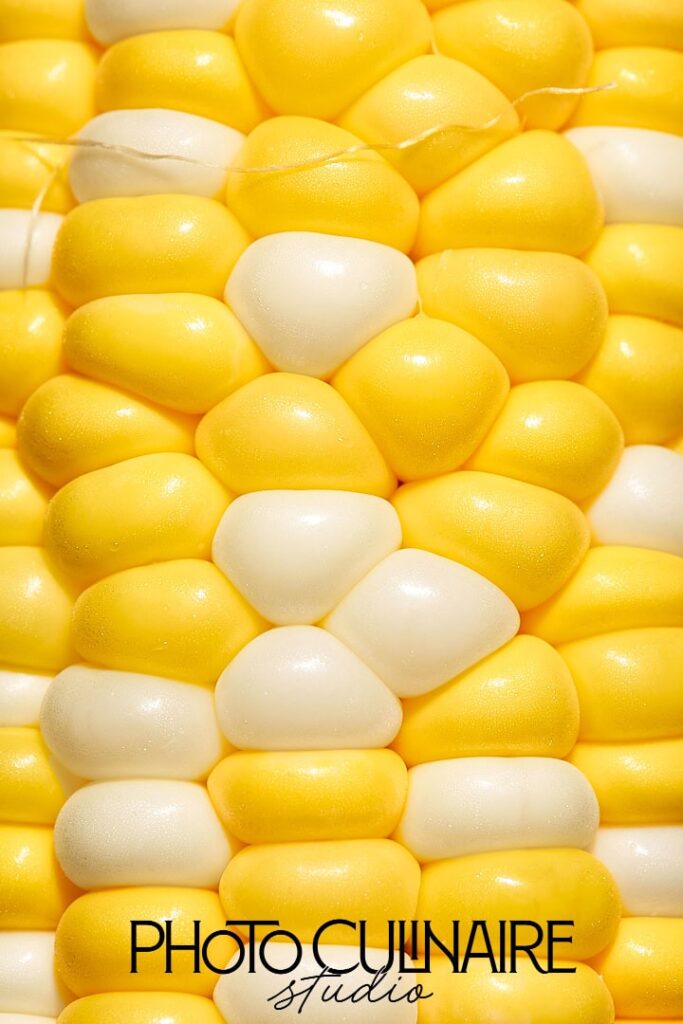
- Play with Textures and Patterns: Food is a treasure trove of textures and patterns. Close-up shots of ingredients or subjects can reveal fascinating details. Think about the glistening surface of a cut citrus fruit, the intricate patterns of grains on bread, or the delicate veins in leafy greens. These textures can transform a simple photo into a tactile experience for the viewer.

- Experiment with Lighting: Lighting can dramatically change the mood and feel of your macro shots. Side lighting can enhance the textures of your subject, while backlighting can create a luminous, almost ethereal look. Backlight is my personal favorite for macro shots. Don’t be afraid to experiment with different lighting setups to find what best accentuates the features of your subject.
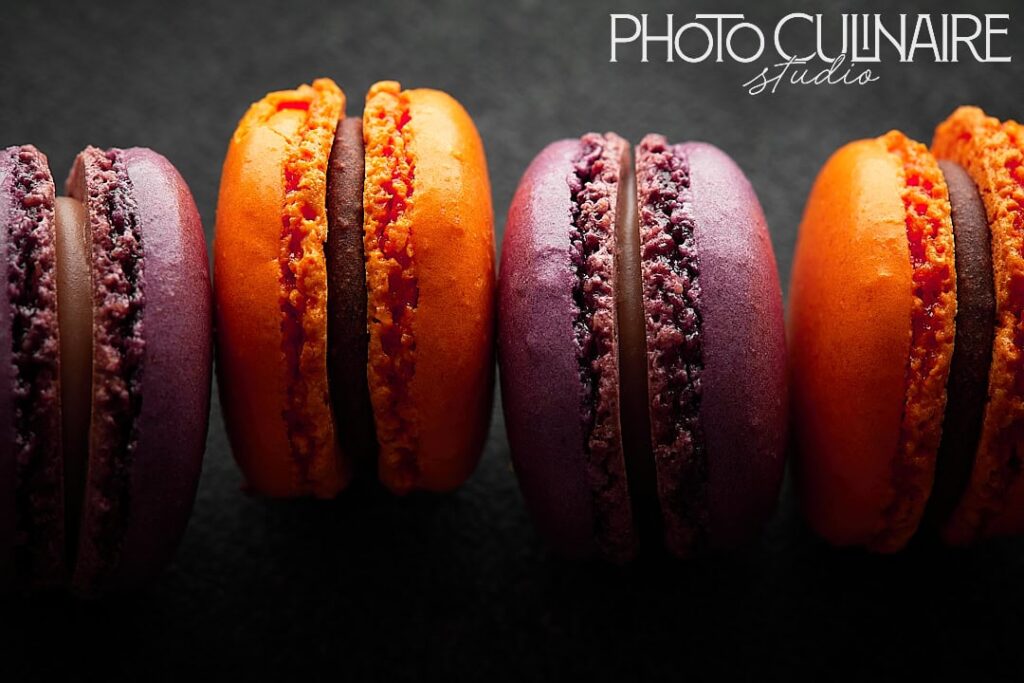
- Focus on Color Contrasts: Color plays a vital role in food photography. Use color contrasts to make your images pop. Using contrasting colors between your subject and background helps the subject stand out, and makes the overall composition more visually engaging
- Incorporate Human Elements: Adding a human element, like a hand holding a berry or a fork twirling pasta, can add a dynamic touch to your macro shots. It introduces scale, adds life to the image, and can make the food more relatable.
- Tell a Story: Use your macro shots to narrate a tale about the food. Let the viewer peek into the world behind the food, adding depth and context to your images.
- Use Negative Space: Sometimes, what you leave out is as important as what you include. Using negative space effectively can make your subject stand out even more, focusing the viewer’s attention on the intended detail. If you want more creative ideas, explore these negative space tips for food photography.
- Capture the Process Shots: The process of preparing food is filled with beautiful moments. Capture the flour being sifted, the vegetables being chopped, or the steam rising from a hot soup. These moments can be as visually compelling as the finished product.
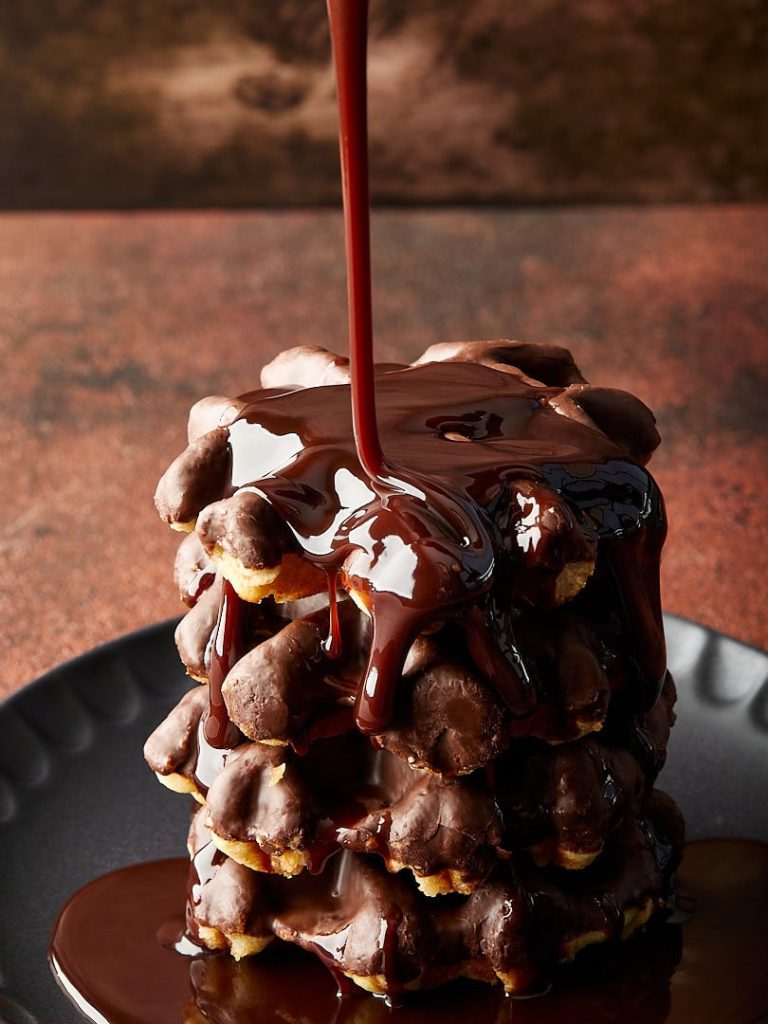
- Drizzles, Sprinkles, Drips, and Pours: Macro shots of drizzles, drips, drops, glazing, swirls and sprinkles exude an irresistible allure. The act of dusting sugar over donuts, captured up-close, immortalizes a perfect moment worth cherishing. Liquids in motion, captured closely, emphasize liquidity and richness. A contrasting backdrop can make these elements pop.


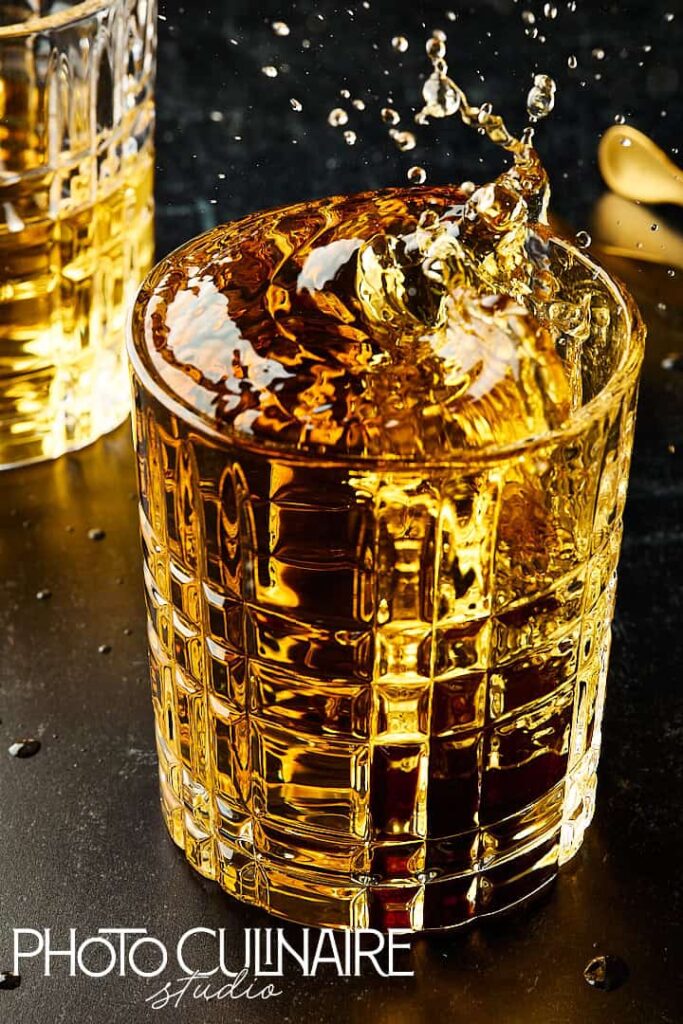
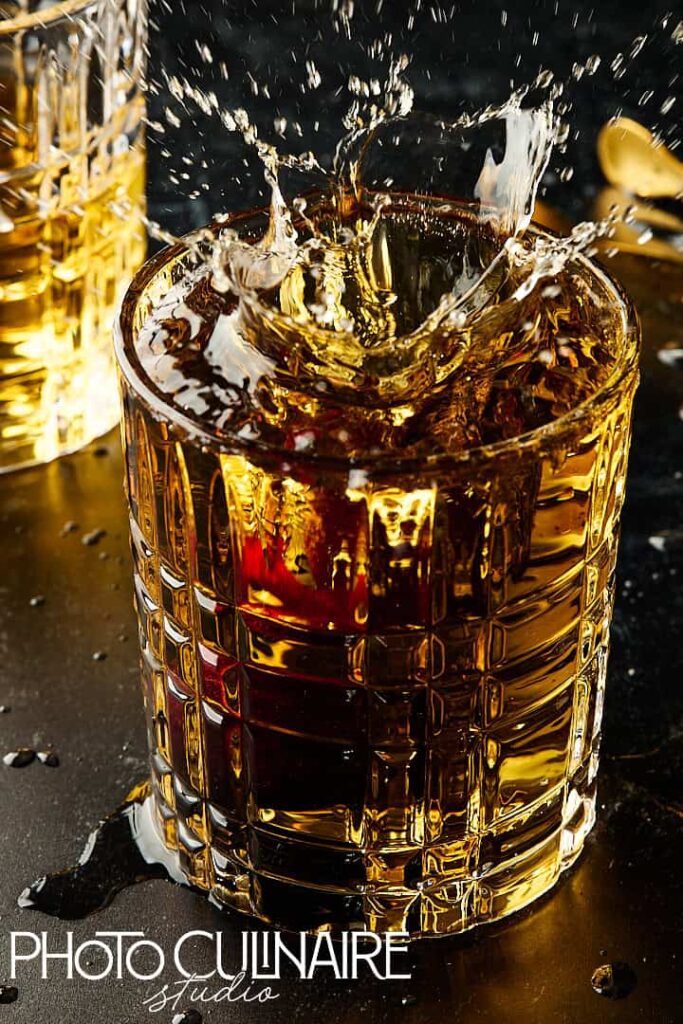
- Splash Photography: Delving into splash photography opens a realm of creative possibilities for incredible macro shots, be it with food, drinks, or mere droplets. The dynamic scenes captured in splash photography are endlessly creative.
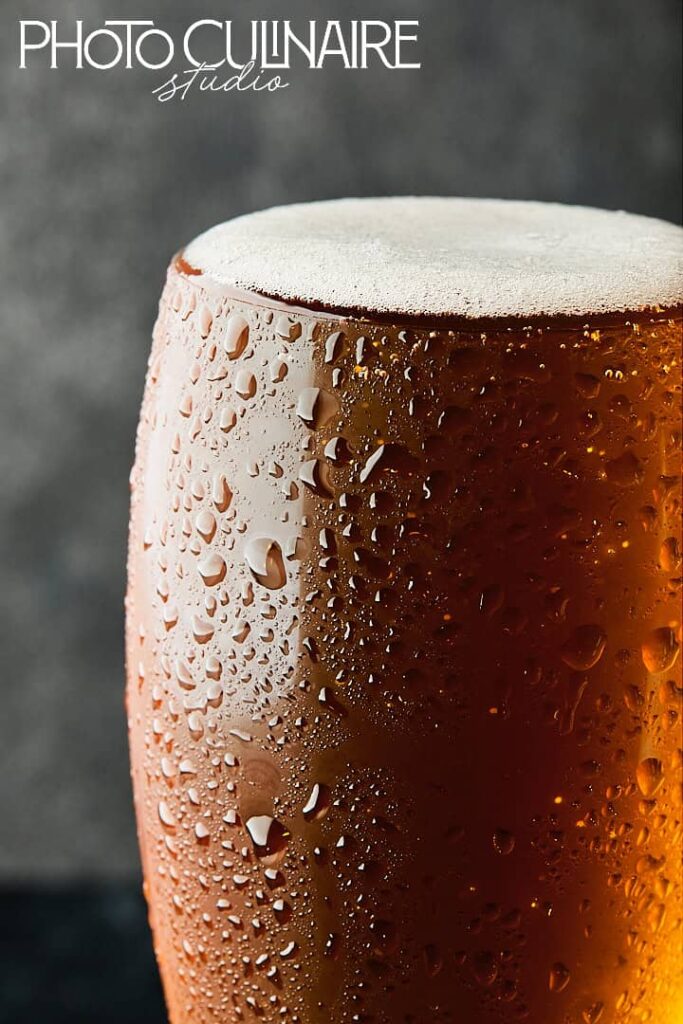
- Condensation: The dewy texture of condensation on chilled beverages offers a refreshing perspective worth capturing.
- Background Selection: Even in close-up shots where backgrounds blur out, the choice of backdrop plays a crucial role. A compelling background sets the stage for your food, enhancing the overall impact of your shot.
By incorporating these techniques and ideas into your macro food photography, you’ll not only enhance your technical skills, but also develop a more artistic and storytelling approach to your work. Remember, the best way to improve is to practice, experiment, and let your creativity flow.
Wrapping It Up: Your Journey in Macro Food Photography
And there you have it! We’ve journeyed through the intricate world of macro food photography together, uncovering the secrets that can transform your shots from good to breathtaking. Whether you’re just getting started or continuing to refine your craft, these ideas can help you bring more depth and detail into your food photography.
But here’s the thing — photography isn’t just about following the rules. It’s about experimenting, staying curious, and enjoying the creative process. When you allow yourself to explore and try new ideas, you often discover images that feel more authentic and engaging.
If you’re ready to build on these fundamentals, explore these expert macro food photography tips for more practical techniques and creative ideas you can start applying right away.
Now, it’s your turn:
Have you experimented with macro food photography or a 100mm macro lens? I’d love to hear about your experience in the comments below.
. . . . .